

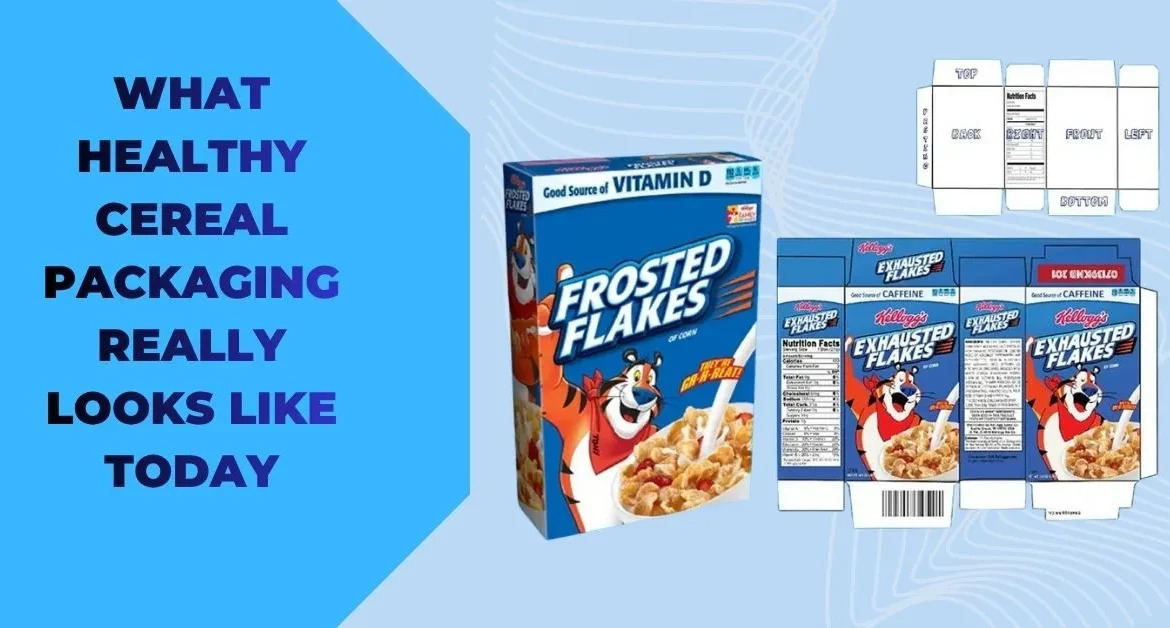
Cereals are our favorite breakfast. However, when it comes to a cereal box that comes with healthy cereal, there are various factors to consider. From food-safe coatings to eco-friendly boards, nutritional facts, and labeling, every element of the cereal box plays a key role in defining it as a healthy packaged good.
In addition to these, how a cereal box protects the products and the environment also matters a lot in today’s eco-conscious world. The packaging material also plays a role in showcasing the cereal boxes as healthy packaged goods. This blog discusses the different elements to help cereal brands make their cereal packaging as healthy as the cereals themselves are. Let’s jump into the details.
What Does It Mean By “Healthy” Packaging?
The phrase “healthy packaging” does not indicate that the box itself is edible or nutritious. Instead, it refers to the packaging that protects the food, the consumer, and the environment while promoting safety and transparency.
Healthy packaging can also be cost-effective for brands. Using lightweight materials reduces transportation costs. It also improves brand reputation and attracts eco-conscious consumers by helping businesses grow sustainably.
Healthy packaging for cereals matters because it protects both consumers and the environment. It ensures that the product inside stays fresh, safe, and free from contamination. Modern consumers care deeply about what they eat and how it is packaged. They prefer packaging that is made from food-safe and recyclable materials.
From an environmental point of view, healthy packaging helps reduce waste, supports recycling, and minimizes the carbon footprint. For brands, it builds trust and shows responsibility toward people and the planet.
When packaging is designed with health and sustainability in mind, it not only attracts conscious buyers but also strengthens a brand’s long-term reputation and market value.
What Makes A Cereal Box “Healthy” In Packaging Terms?
A cereal box is considered a sign of health with the addition of various elements. But the major factors that make the cereal packaging valuable include the following:
Food Safety
Food safety is the foundation of great packaging. A cereal box must be made from non-toxic materials. The materials prevent contamination during storage and transport. The FDA strictly advises the use of food-grade materials.
Moreover, manufacturers must ensure that inks meet FDA migration limits under normal storage conditions. The proper sealing barriers prevent moisture from entering the box. They also maintain the cereal crispiness.
Sustainability
Sustainability defines the environmental features of the cereal boxes. A sustainable box design minimizes waste and supports recyclability.
Eco-conscious brands choose cereal boxes made from SBS boards approved by the FDA. These materials can be repurposed through the recycling process. Moreover, some brands also opt for soy-based inks that eliminate the use of petroleum-based components.
Consumer Well-Being
Packaging shapes the consumer’s perception. These days, shoppers want transparency about what they eat and how it’s packaged. Because of these reasons, brands focus on clear labeling of nutrition facts and ingredients on the cereal boxes. These additions reassure buyers about the product quality but also align with well-driven lifestyles.
Aside from these, minimalist packaging designs with clear fonts also showcase authenticity. The labels of 100% recyclable and FSC certified also create a healthy perception of cereal packaging. Food safety is vital, and the FDA provides clear guidelines to ensure it.
The Role of FDA Guidelines in Defining Safe Cereal Packaging

Cereal packaging is a protective barrier that directly impacts the consumer’s health. The US Food and Drug Administration (FDA) regulates the materials used in cereal packaging that come in direct or indirect contact with food.
For cereal packaging materials, compliance with Title 21 CFR (Parts 170–199) is required to ensure they are safe for food contact. These parts cover substances such as polymer coatings, adhesives, and additives used in packaging.
Additionally, 21 CFR Part 101 governs food labeling. It ensures that the nutritional facts, ingredient lists, and other required information on cereal boxes are accurate and transparent. Together, these regulations ensure that every cereal box protects its contents and the consumer’s well-being.
Here are the key FDA requirements for cereal box packaging:
- Only FDA-compliant materials should be used for cereal packaging.
- Food-grade coatings or inks must meet FDA-approved migration limits under normal storage and handling conditions.
- The manufacturing companies must provide clear and accurate labeling of ingredients and nutritional facts in accordance with 21 CFR Part 101.
What Are The Contents Of The Cereal Box?
Cereals inside the box do not make the packaging healthy. There are various other factors that play a role in creating the look of the healthy packaged cereal box. This includes the following elements:
Nutritional Information Panel
The cereal box nutritional information includes the following:
- Number of calories in each serving
- Total Fat Content (Saturated, trans fat)
- Sodium content
- Dietary fiber and total sugars
- Protein and key vitamins. It also includes minerals.
Product Type
A cereal box must include the details of the type of cereals packed inside:
- Whole-grain cereal
- fiber-rich cereal
- Bran cereal
- Fortified cereal
Credible Health Or Quality Seals
The cereal boxes consist of seals or verifications from recognized organizations. They include the following elements:
- US Department of Agriculture Organic
- Non-GMO Project Verified
- American Heart Association, Heart-Check Mark
- Recyclable Packaging Logos
Transparent Packaging
Cereal boxes consisting of see-through windows or catchy images catch the customer’s eye. This helps the customers with the following:
- A buyer can view the types of cereals inside the box. The windows help to determine the texture and form of the cereals.
- The customer can also check the portion size or quality before making the purchasing decision.
What Is The Psychology Behind Colored Cereal Boxes?

Colors are one of the most powerful design elements in cereal packaging. They don’t just catch attention on shelves, but they also shape how customers feel about a brand.
Each color reflects certain emotions, values, and even the type of audience the cereal targets. The table below explains what different cereal box colors typically represent and how they are used in packaging design.
| Color | Represents | Common Use |
| Red Cereal Boxes | Energy, excitement | Kids’ and sugary cereals |
| Yellow Cereal Boxes | Happiness, warmth | Classic family cereals |
| Green Cereal Boxes | Health, eco-friendliness | Organic and whole-grain cereals |
| Blue Cereal Boxes | Trust, calm, diet | Fitness and adult cereals |
| Brown Cereal Boxes | Natural, wholesome | Granola and oat cereals |
| White Cereal Boxes | Simplicity, purity | Low-sugar and healthy cereals |
| Black Cereal Boxes | Luxury, premium | Gourmet cereals |
| Multi-colored Cereal Boxes | Fun, flavor, playfulness | Children’s cereals |
Packaging Material Matters
Material defines a good cereal box structure. There is a wide variety of materials for packaging, but only a few make the packaging “healthy”. Given are the materials used for cereal boxes:
- SBS Board
- Cardstock
- Bux Board
- Kraft Board
SBS board and cardstock remain the top choices for premium and health-oriented cereal packaging. Both materials can meet FDA guidelines and offer strong print quality, moisture resistance, and recyclability. Buxboard and Kraft board are other inexpensive choices. The materials consist of the following features:
- They have excellent print quality.
- These materials provide moisture resistance when coated with aqueous or polyethylene (PE) coatings for a moisture barrier.
- The cereal box materials are recyclable.
Eco-Friendliness: The New Benchmark for Cereal Packaging
Today’s market values eco-friendly cereal boxes that not only protect the cereals but also align with a safer environment. The following are the components that play a role in making the cereal boxes eco-friendly:
Use Of Water-based Inks
The water-based and soy-based inks are derived from renewable resources. However, soy or water-based inks may require compatible coatings to prevent moisture sensitivity. These inks emit fewer volatile organic compounds (VOCs). They reduce air pollution. And they are also safe for both consumers and manufacturers.
Moreover, these inks are the best alternative to petroleum-based inks. The popular cereal brands, including Nature’s Path and Three Wishes, have shifted to eco-friendly cereal packaging and have earned loyal customers.
Recyclability and Reusability: Giving Cereal Boxes a Second Life
According to the American Forest and Paper Association, the annual recycling rate of paper is 60 to 64%. The US mills used 1.29 million tons of recycled paper to make new products in 2024. This value is 32.7 million tons compared to the 31.3 million tons in 2023.
So, a cereal packaged box does not end at breakfast, but it begins a new cycle. The recyclable cereal boxes are made from materials that are broken down to create new paper packaging boxes.
However, one challenge to full recyclability is the inner plastic liner often used in cereal boxes. These liners are difficult to process with paper materials. Replacing them with compostable or recyclable alternatives can greatly enhance the overall eco-friendliness of cereal packaging.
How Are The Cereal Boxes Recycled?
A cereal packaging box is mostly recyclable. The recycling process of cereal packaging boxes involves various steps that recover and reuse paper fibers while minimizing waste.
Collection Of Used Cereal Boxes
The used cereal boxes are collected from the curbside or drop-off centers. After collection, the materials are sorted at the recycling facility to separate the clean boxes from contaminants like plastic or foil.
Shredding And Pulping
The sorted cereal packaging boxes are shredded into small pieces. They are mixed with water and mild chemicals. These elements are mixed to create a slurry called pulp. This pulping process breaks down the paper fibers and dissolves inks and adhesives. It also breaks the coatings.
Cleaning and Deinking
The pulp is filtered and cleaned to remove any remaining contaminants. The air bubbles in the process lift inks from the fibers. The deinking is the industrial process of removing printing inks from the recycled paper to make clean pulp for new products.
Refining and Bleaching
The recycled pulp fibers are mixed to make them soft. The refining process helps the fibers bond better. Moreover, if the recycled pulp looks grey, then it is lightly bleached to make it brighter. However, sometimes the new virgin fibers are added to increase the durability of cereal boxes.
Sheet Formation
After refining, the pulp mixture is spread onto a wire screen. It is then pressed to remove the excess water. It is then dried and also rolled into large sheets of recycled packaging material.
Remanufacturing
The recycled paperboard is sent to packaging manufacturers. Then, it is converted into new boxes or cartons. Moreover, many new cereal boxes contain up to 80% post-consumer recycled fiber, which makes the cycle sustainable.
Reuse and Continuous Loop
The cereal boxes are recycled into new products. The new products go through the recycling process again. Paper fibers can be recycled 5 to 7 times before they wear out. Because every time the paper is processed, the fibers become weaker and shorter. This makes them weaker for a new product. After 5–7 cycles, fiber quality degrades and is down cycled into the container board
Carbon-Conscious Shift: States Leading to Zero-Carbon Packaging
The U.S is moving toward a carbon-neutral packaging future. The cereal box manufacturers are also a part of this transformation. However, the paper production and printing are energy-intensive processes.
The US states are now implementing policies to reduce emissions and encourage recyclable materials. These implementations are not just about environmental responsibility, but they also reflect the consumer demand for low-impact as well as sustainable packaging.
Moreover, the cereal industry is becoming a strong symbol for America’s carbon-free packaging economy. The following are the US states leading the carbon-free packaging movement:
California: The Pioneer of Packaging Responsibility
California leads the country in sustainable packaging laws. The state holds the manufacturers responsible for the full life cycle of their packaging. This is done through the Extended Producer Responsibility (EPR) program. California aims to make 100% of packaging recyclable. The state is setting a national benchmark for carbon-free packaging design by 2032.
Washington and Oregon: Driving Renewable Energy and Carbon Transparency
The Pacific Northwest states focus on the energy sources used in packaging production. The manufacturers are encouraged to switch to renewable power. They are also asked to disclose the annual reporting of the carbon emissions.
This transparency motivates companies to reduce their carbon footprint. The companies are also advised to adopt cleaner technologies in paper and printing facilities.
New York: Incentivizing Lightweight and Low-Emission Packaging
New York promotes low-carbon emissions and lightweight materials. This is done with the help of government grants and recycling innovation funds. The state’s programs encourage the development of carbon-smart materials.
This is also for real packaging boxes that require less energy to produce and transport. The table below shows U.S. states leading the carbon-free packaging movement.
| State | Key Policies & Programs | Primary Goals and Deadlines |
| California | Extended Producer Responsibility (EPR) Act, SB 54 Plastic Pollution Prevention Act | Achieve 100% recyclable or compostable packaging by 2032 |
| Washington | Clean Manufacturing Initiative, Renewable Energy Integration Policy | Reach carbon-neutral packaging production by 2040 |
| Oregon | Sustainable Packaging Assessment Program, Carbon Footprint Reporting | Oregon aims to substantially reduce emissions from packaging and is currently targeting major reductions by 2035 |
| New York | Smart Packaging Innovation Grant, Extended Recycling Programs | Promote lightweight and low-emission packaging by 2030 |
| Colorado | Circular Economy Development Center, Eco-Label Certification | Attain zero packaging waste in landfills by 2040 |
| Massachusetts | Non-Recyclable Food Packaging Ban, Green Manufacturing Standards | Ensure 100% recyclable or biodegradable packaging by 2035 |
Consumer Trends that Value Eco-Conscious Packaging

Millennials and Gen Z no longer describe a healthy product by its nutritional content. They think health extends to the environmental and ethical footprint of what they buy. This generational shift has transformed cereal packaging from an ordinary container to a symbol of transparency. The recent studies show the following results:
- 74% of the US brands now prefer the use of sustainable materials and food-grade coatings. They associate eco-conscious packaging with trust and long-term value.
- 61% of the buyers are willing to pay more for eco-friendly cereal boxes. This happened after the recognition of sustainable packaging to support both humans and the planet.
- 57% of shoppers look for Recyclable or FSC-certified labels when choosing cereal items. These certifications are visible proof that the brand meets the ethical standards for a safer environment.
This growing awareness has fueled a strong design trend towards plain cereal boxes with minimalist aesthetics. They use soft earth tones and limited ink coverage.
This kind of design communicates authenticity. These additions perfectly align with the health-conscious consumers who equate simplicity with purity. So the message is clear:
Eco-Friendly Packaging Is Now A Core Buying Factor. It Is Not A Marketing Add-On
This means the brands that embrace low-carbon materials are not just protecting the planet but are also winning the customers’ loyalty.
Labeling and Transparency: What Modern Cereal Boxes Communicate
Cereal box labeling has evolved from just ingredients to include environmental and ethical claims. In these modern times, the essential labels for cereal packaging include the following:
- Nutritional facts panel for cereal calories and macronutrient information.
- Allergen and gluten-free statements
- Recycling icons
- Certifications: FSC Certified, Compostable, or Carbon Neutral.
- QR codes linking to sustainability reports or ingredient sourcing.
Case Studies: Real Cereal Brands Leading the Packaging Revolution
Various popular cereal brands in the US are shifting to eco-friendly packaging to attract eco-conscious buyers. Given are the examples of cereal brands and how shifting to green packaging builds their brand.
- Kellogg’s: Kellogg’s cereal brand has reduced the packaging waste by 25%. This brand uses 100% recycled material for cereal boxes. It also invests in lightweight materials to lower the transport emissions.
- General Mills: This brand transformed Cheerios into fully recyclable materials. They also eliminated the use of an inner plastic bag in some regions.
- Nature’s Path Organic: Nature’s Path leads with compostable inner liners that are made from plant-based films. The inks are also free from heavy metals. These elements make the packaging truly healthy.
Future of Cereal Packaging: Where Innovation Meets Responsibility
The future of cereal packaging combines all factors. From technology to sustainability and awareness. So, the future innovations in cereal box packaging include the following:
- AI-driven design optimization to reduce material waste is an emerging R&D direction.
- Smart packaging labels track recyclability and sourcing.
- Next-generation coatings made from algae or sugarcane.
- Blockchain-based traceability for ethical supply chains.
As environmental regulations tighten and consumers demand transparency, cereal packaging will evolve into an intelligent, regenerative system. It also balances health, safety, and planet care.
As the cereal market evolves, sustainable packaging is no longer optional. It has become the standard for modern brands that care about quality and responsibility.
Final Words
A robust cereal packaging goes far beyond just holding the product. It combines food safety, sustainability, transparency, and consumer trust to create packaging that is both safe and environmentally responsible. From choosing FDA-compliant materials and eco-friendly inks to clear labeling and recyclable designs, every element contributes to the perception of a healthy product.
As consumer awareness grows and regulations tighten, brands that embrace sustainable and transparent packaging not only protect the planet but also build stronger loyalty and trust with their customers. The future of cereal packaging is moving toward innovative, intelligent, and eco-conscious solutions that balance health, safety, and environmental responsibility.
Key Takeaways
- Cereal boxes should be made from safe, non-toxic materials that follow FDA guidelines.
- Food-grade coatings and inks prevent contamination and keep cereals fresh.
- Sustainable materials like SBS board and soy or water-based inks help reduce environmental impact.
- Clear labels with nutrition facts, ingredients, and certifications build trust with consumers.
- Minimalist designs and recyclable logos make packaging appear healthier and more authentic.
- Colors on cereal boxes can communicate messages, like green for health or red for energy.
- Materials like SBS board and cardstock offer good print quality, moisture resistance, and recyclability.
- Water-based and soy inks, along with biodegradable coatings, reduce pollution and are safer for the environment.
- Cereal boxes can be recycled 5 to 7 times before fibers weaken, supporting a circular economy.
- States like California, New York, and Washington are leading zero-carbon and sustainable packaging initiatives.
- Consumers, especially Millennials and Gen Z, value eco-friendly packaging and are willing to pay more for it.
- Brands like Kellogg’s, General Mills, and Nature’s Path Organic are adopting sustainable, recyclable, and compostable packaging.
- Future trends include AI-optimized designs, smart labels, sustainable coatings, and blockchain for supply chain transparency.